How to budget shared household expenses
By Jordan
5 min read · Published Nov 30, 2024
A household budget needs to show both personal spending and the shared costs that keep a home running. Rent, utilities, groceries, and subscriptions can affect several people at once, so tracking them separately makes each person's monthly contribution easier to plan and review. SplitMyBills is designed for the shared-expense part of that process.
1. Separate personal costs from shared household bills
Start with two lists. Personal costs include phone plans, clothing, and meals bought for one person. Shared costs include rent, internet, utilities, common groceries, and household supplies. Keeping those lists separate prevents a roommate reimbursement from being counted as personal income or personal spending in the wrong budget.
For a practical household workflow, use the roommate bill splitter guide to record the shared amount, payer, participants, and settlement balance.
2. List fixed, variable, and recurring shared costs
List the shared charges that repeat and the ones that change from month to month. This makes it easier to estimate the household total without treating every bill as if it were the same.
- Fixed: rent, internet, and standard membership charges.
- Variable: electricity, water, groceries, and shared meals.
- Recurring: subscriptions, utilities, and scheduled household services.
Keep one currency per sheet and add a note when a bill changes because of a price increase, a partial month, or a one-off charge. That context is useful when the group reviews the next monthly balance.
3. Choose a fair contribution method
Use an equal split when everyone benefits similarly. Use a percentage or custom amount when rooms, usage, or participation differ. The bill-splitting methods guide explains how to choose and document each approach.
4. Add recurring bills and review the calendar
Add rent, utilities, and subscriptions as recurring expenses when the charge follows a predictable schedule. Review the projected dates in the calendar so the household can plan for upcoming costs instead of remembering them after the payment is due. The shared subscription guide covers this workflow for family plans and other recurring charges.
5. Review shared spending by category
At the end of the month, compare the shared total with the household plan. Reviewing spending by member and category can reveal a recurring charge that needs a new split rule or an expense that should have been personal.
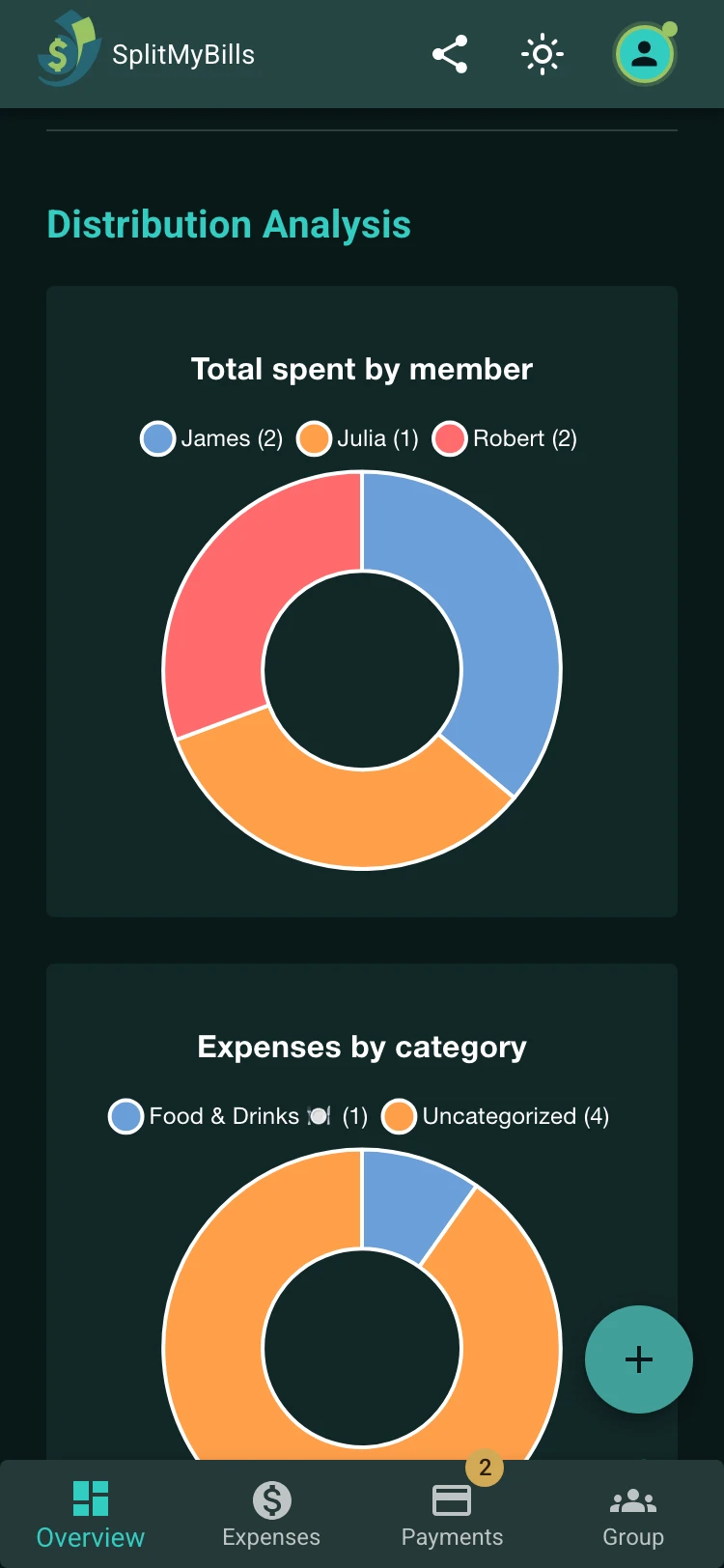
6. Settle monthly without double-counting reimbursements
When one person pays a shared bill, record the payer and the participants in the expense sheet. Treat the reimbursement as money moving between people, not as a second household expense. Review the payment status before the monthly budget is closed so the same bill is not counted twice.
7. Leave room for personal savings goals
Once the shared costs are known, each person can plan personal savings goals around their actual contribution. Keep those private goals separate from the shared balance, and revisit the household split when rent, utilities, or the people included in a recurring bill change.
Monthly household budget checklist
- Separate personal expenses from costs shared by the household.
- Record the payer, participants, amount, date, and split rule.
- Use recurring expenses for predictable bills.
- Review categories and projected dates before settling.
- Plan personal savings after the shared contribution is clear.
Create a free shared expense sheet for the next household budget review.
Updated Aug 9, 2026